Glancing at your lecture notes as you take a stroll around the campus, the refreshing fragrance of the grass will tantalise your nostrils. Occasionally, you will be greeted by a curious flock of ducks or some quaint pink-headed parrot-like creature. Or, you may even be fortunate enough to catch a glimpse of the wild kangaroos.
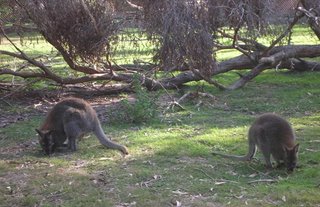
But, do bear in mind that you are in Monash University Gippsland – not a safari.
So, while the lush greeneries and the richness of fauna in Gippsland make it a Mecca for nature enthusiasts, Monashians in Gippsland also have the privilege and comfort of extremely well-developed transportation and communication systems.
High-tech facilities minus the hustle and bustle of the cities contribute to the campus’ growing popularity among international students. Currently, international students represent 15-percent of the student population in the Gippsland campus.
“This gives a good dose of multiculturalism, but also ensures that international students have lots of opportunity to interact with Australians,” said Danielle Hartridge, Manager of the International Student Support Unit.
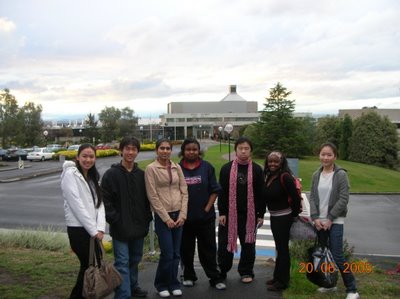
L to R: Tim, Wayne Tan, Nisha, Waithira, James, Catherine and Yi Ping (Eva)
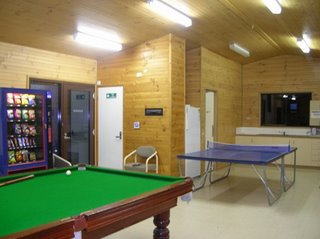 Recreation halls are equipped with audio visual facilities, air-conditioned computer labs, pool tables, and table tennis equipments
Monash University Gippsland is located in Churchill town, which is approximately 80 minutes to two hours’ drive from Melbourne, by train or by car. A normal fare V-line train ticket to Melburne costs AUD$22 (approximately RM 61.50). An off-peak return ticket, priced at AUD$30.80 (approximately RM85.50) will offer greater savings to frequent travellers to the city.
The great news is, exchange students are entitled to a 50 percent discount on all transportation fares in Victoria (Do I hear some gasps of delight?).
_________________________________
Student concession card:The good news is that, cardholders are entitled to a 50% discount on all public transportation fares in Victoria. The not-so-good news - well, only local students and exchange students can apply for this card
_________________________________
While the V-Line trains operate every day, the LaTrobe Valley bus service does not run on Sundays. But, fret not, even if your dynamic personality requires you to travel several times daily. The costs of second-hand cars are relatively cheap.
“My friend’s second-hand car costs less than AUD$1,200 (RM3,360),” said Eva Cheng Yi Ping, a student from Hong Kong.
What a relief to know that the price of a Perodua Kancil can buy us more than 8 second-hand cars in Gippsland! A greater reason to jubilate is of course, the fact that we can easily get free rides from the local students who have got cars.

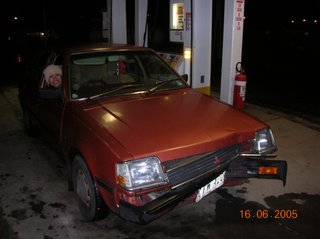
This is Matthew's car (the one that cost less than RM3,360, according to Eva). It's quite a decent-looking car, actually...
...before the accident, of course. By the way, I wasn't the culprit who disfigured the little red beauty.
“I don’t have a car. I don’t drive either. But I can always tag along whenever my friends go to MidValley or Traralgon Plaza,” said Eva.
Coincidentally, there is also a huge shopping centre by the name of MidValley in Gippsland, located 10 kilometres from the campus. MidValley houses big tenants such as Safeway and Big W (Carrefoure-equivalents), Target (a Tesco-sized clothes store) and DickSmith (twice the size of your regular SenHeng), as well as a discount store, a florist, several gift shops, clothes shops, CD stores… the list continues.
However, if a fast-shrinking budget requires you to scrimp and save on transportation fares and petrol expenses, shopping can always be done at the FoodWorks supermarket adjacent to the campus.
“It’s only about 60 to 300-metres walk from uni,” said Anthony Luke Begbie, who lives on-campus.
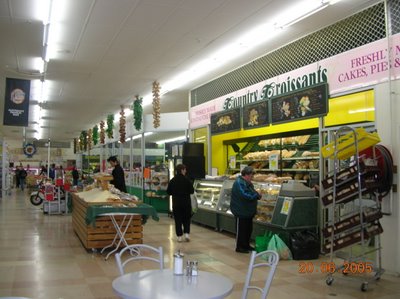
Manny's Market; my favourite:-)
Nevertheless, my favourite nook is still the Manny’s Market in Morwell town (approximately 9 kilometres from the campus). After all, who can resist the sight of juicy strawberries, sweet-smelling peaches, and the bewitching aroma of freshly baked loaves? Be it farmers produce, delicatessen or fresh meat, Manny’s Market offers the best in terms of price and variety.
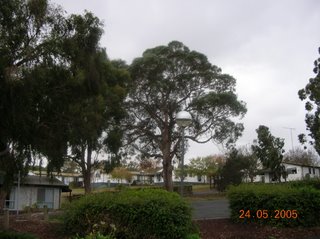
The chalet-like 'West Units' of the on-campus accommodation (This snapshot was taken from the window of my room in West House 6)
Besides convenient shopping, our needs for occasional doses of entertainment are also easily fulfilled. There is a bowling club, a go-karting entertainment park and a rose garden in Morwell, a sports and leisure centre in Churchill, chic nightclubs in Traralgon, a golf-course within the vicinity of the campus, free unlimited games of pool in the Student Union lounge and campus recreation halls, free weekly yoga and meditation classes organized by the Community Services Department, plus more than twenty clubs and societies in the Gippsland campus!
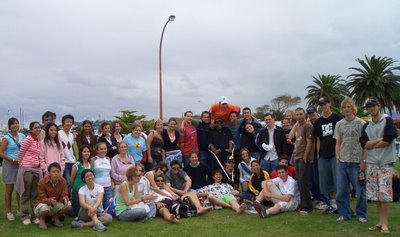
International and local students having a fabulous time at Cowwar Weir, a popular beach spot
The ISA (International Student’s Association), which caters to the welfare and entertainment needs of the international students, is one of the most active societies in the campus.
“We in ISA always try our best to make the international students’ experiences here a memorable one,” explained Wayne Tan, Vice-President of the ISA.
“Whether you are a pizza-lover, movie addict, shopaholic or a ‘travel-holic’, ISA always have something in store for you,” Wayne said, mimicking the voice of a radio deejay.
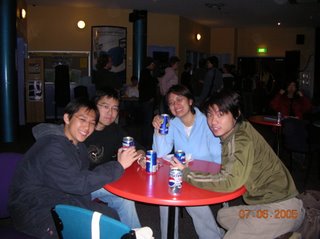
Wayne, James, May and Brandon having fun at the BBQ Party organised by the Gippsland Residential staff members
“We organize a ‘Movie Night’ with each release of a new movie. The tickets are partly subsidized by MUGSU (Monash University Gippsland Student Union),” he explained. “…there are parties and free food every now and then. Free pizzas, free Subway sandwiches, free Hungry Jack’s burgers, free barbeque, free three-course dinners …”
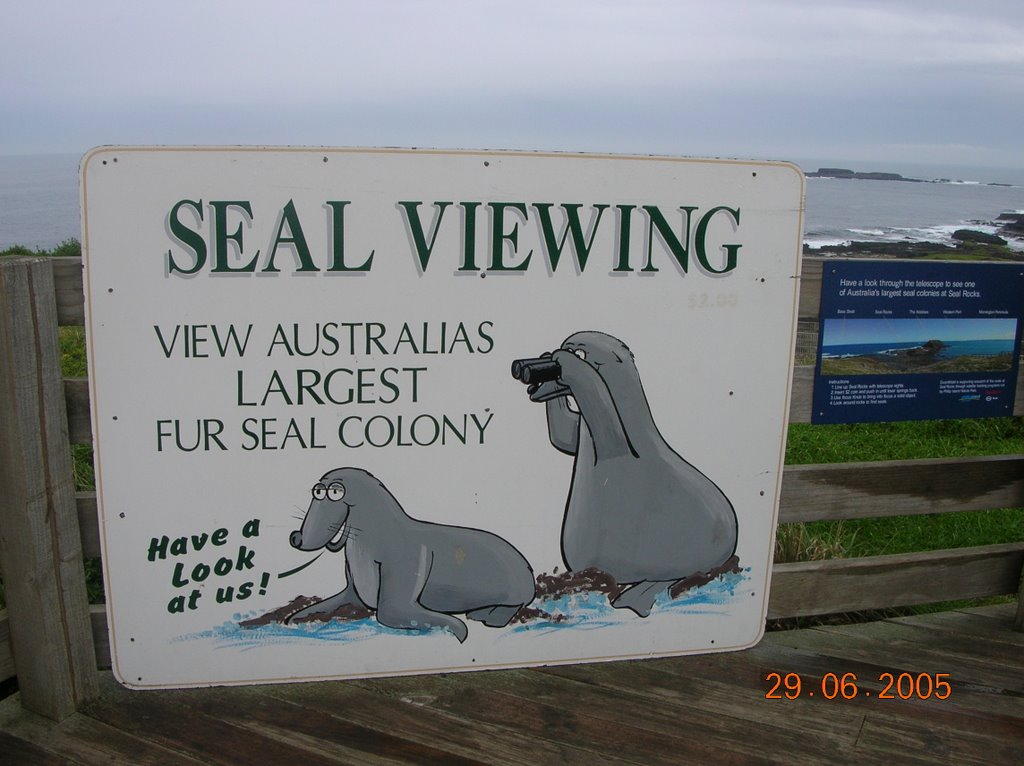
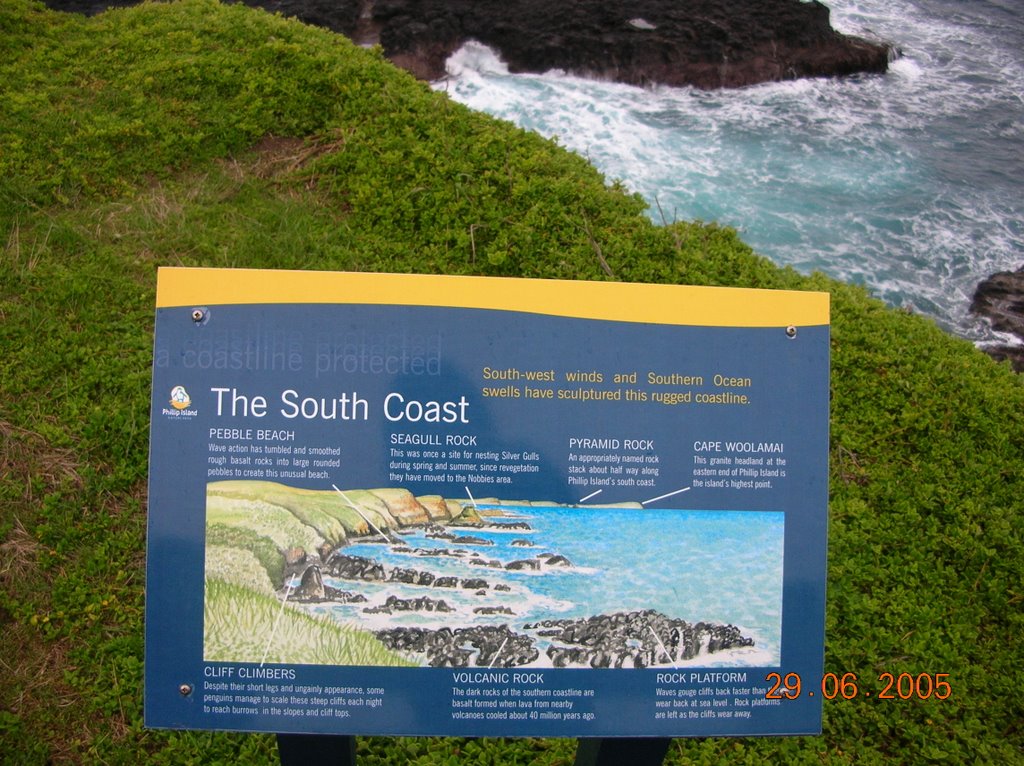
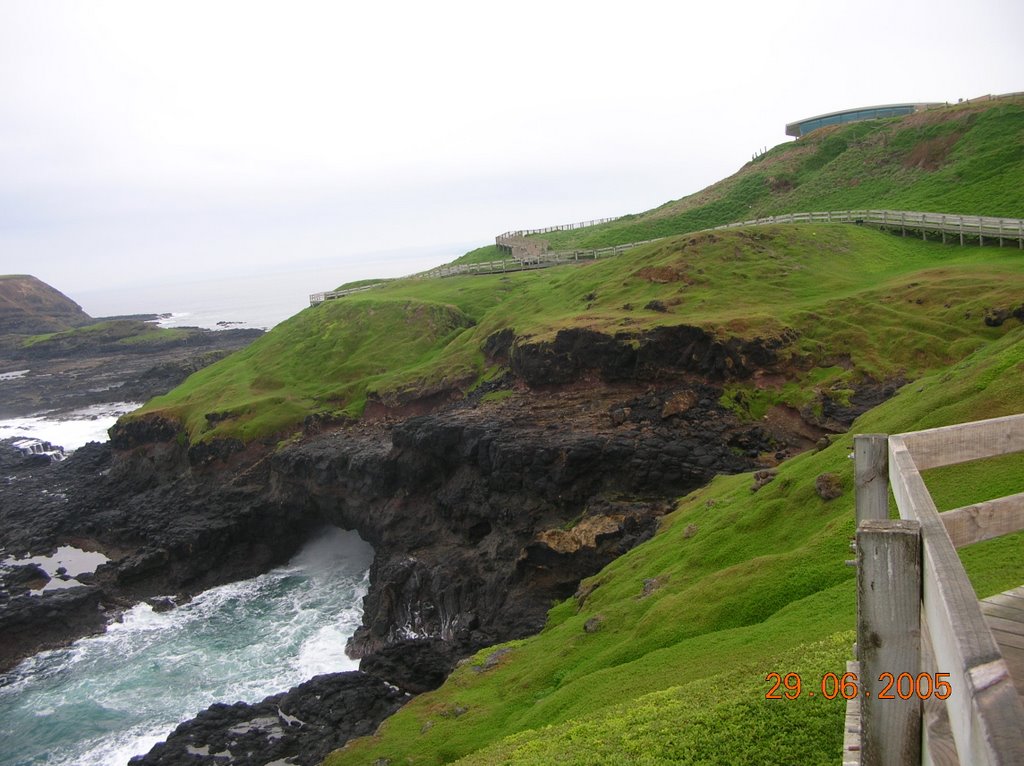
ISA also organize tours to local places such as the Fountain Gate, Dandenong Market, Queen Victoria Market, the Great Ocean Road, Mount Baw Baw, and the Phillip Island.
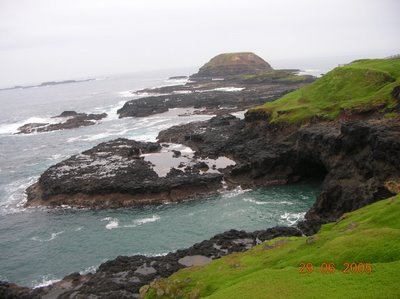
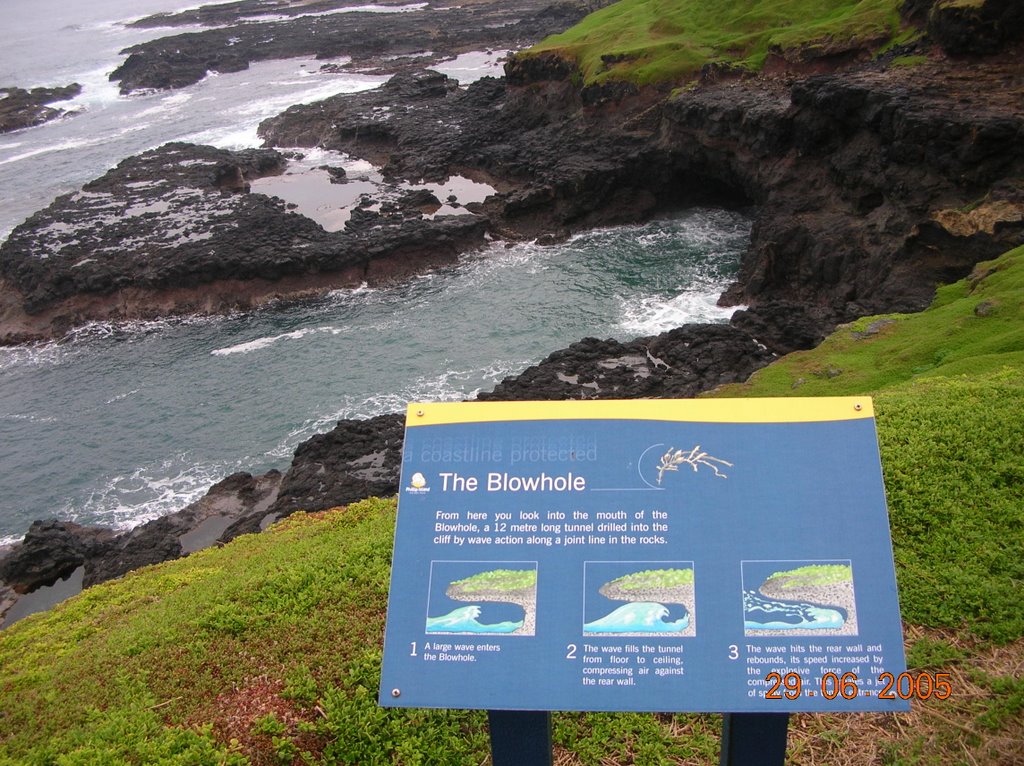
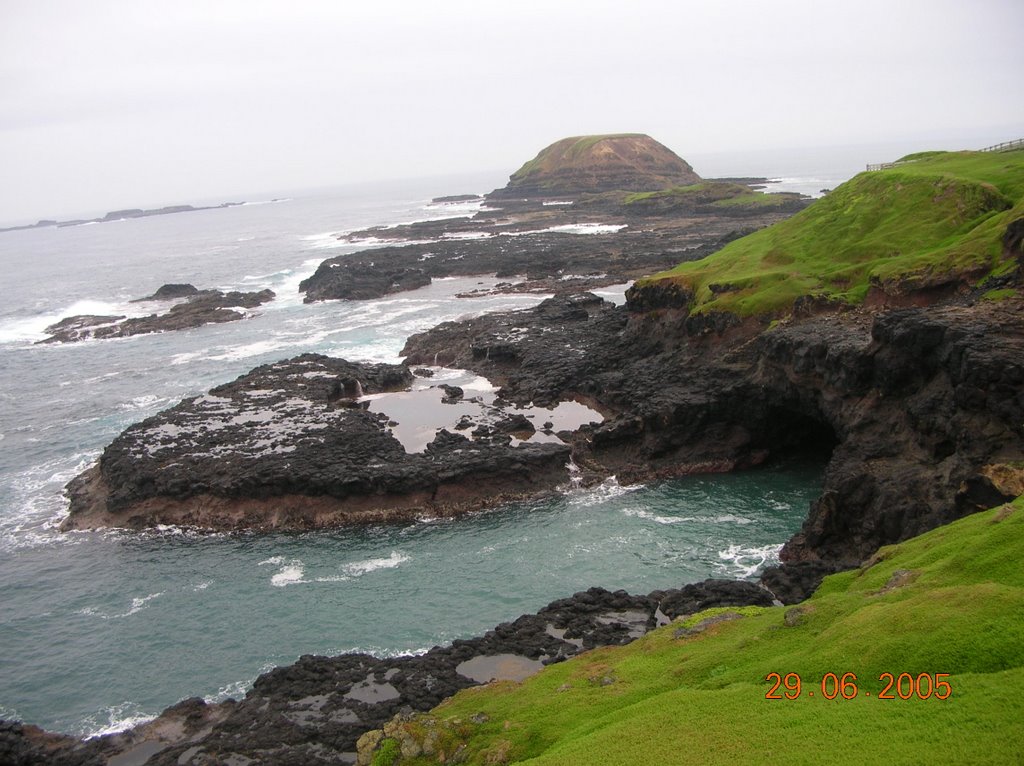
The famous "Blowhole" of the Phillip Island - awesome!
“I’ve had heaps of fun when I joined the Great Ocean Road tour earlier this year,” said Safinat Nisha, a first-year Bachelor of Social Welfare student from Fiji.
Subsidized by MUGSU, the two-day tour cost only AUD$50 (approximately RM140). The same tour would have cost more than AUD$200 (approximately RM560) at travel agencies.
Besides sponsoring ISA-organized activities, MUGSU also provides food vouchers to students who may be having a difficult time financially.
“We believe in taking care of students, not just academically, but socially and physically,” said Justin Kohlman, Monash University Gippsland’s Manager of Marketing.
But, do they also vaccinate us from homesickness? Well… they do, apparently.
“We have staff members who will happily get you involved and take your mind off your homeland with great new experiences in Gippsland,” said Danielle Hartridge.
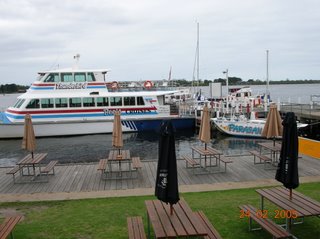
The Thunderbird boat cruise at Lakes Entrance (we saw dolphins!)
To keep the homesickness virus at bay, orientation weeks in Monash University Gippsland are always packed with fun-filled, educational and social activities – guest talks by representatives of VicRoads (for students who would like to find out more about driving in Victoria) and the Victorian Police, outdoor barbeques, farm visits, picnics at the Loy Yang Power Station and Cowwar Weir (a popular beachspot in Gippsland), boat cruise at the Lakes Entrance, cultural dinners, quizzes and games, and also the ‘Pyjama Breakfast’.

“Moving to a new country is a big challenge and so, our goal right from the time of orientation week is to get everyone involved, making sure everyone makes friends and feel at home here,” said Justin Kohlman.
So, how effectively is the issue of homesickness dealt with? Let us hear what the students have to say.
“I hardly feel homesick at all because we (the on-campus students) are provided with efficient Wireless LAN connection. I can video chat on MSN with my family and friends anytime, from the comfort of my room, or even while watching television in the common room,” said Law Yuk Li, who shares the same on-campus unit with five other students of different nationalities.
Likewise, I cannot remember being infected by bouts of homesickness.
“Of course, it’s normal to have the initial insecurities about being in a new place but…I fell in love with Gippsland the moment I set my foot here,” said Catherine Njeri, an exchange student from Monash South Africa, currently studying in Monash University Gippsland.
“I love almost everything about Gippsland,” she continued.
Well, is Gippsland really that perfect? Perhaps not…
“The parrots’ squawkings every morning can be rather annoying,” Catherine said, giggling. “I’ve never once missed my 9am classes, thanks to their morning calls.”
Another down side to being in Gippsland is that you will need to have at least the very minimum culinary skills of being able to handle a microwave, or be prepared to fork out AUD$6 (approximately RM17.50) for every meal.
My first experiment with the microwave nearly turned me into a suicide bomber. Attempting to bake a cake for a tea party, I placed an aluminium tin into a microwave, almost causing an explosion.
Undeterred by the aforementioned near-death experience, I have even coaxed my friends into drying our underwear in a microwave, which of course reduced the garments into unrecognizable bits of gooey, black substance. This happened when we were staying overnight at the Port Campbell lodging, while joining the MUGSU-organized Great Ocean Road tour.
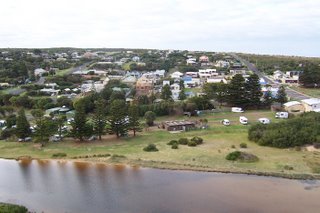
Great Ocean Road tour- a bird’s eye view of the picturesque Port Campbell town
Fortunately, the chances of similar mishaps in the Gippsland campus are almost nil, as all the on-campus housing units are equipped with clothes dryers.
So, are you now ready to embark on an adventure in Gippsland?



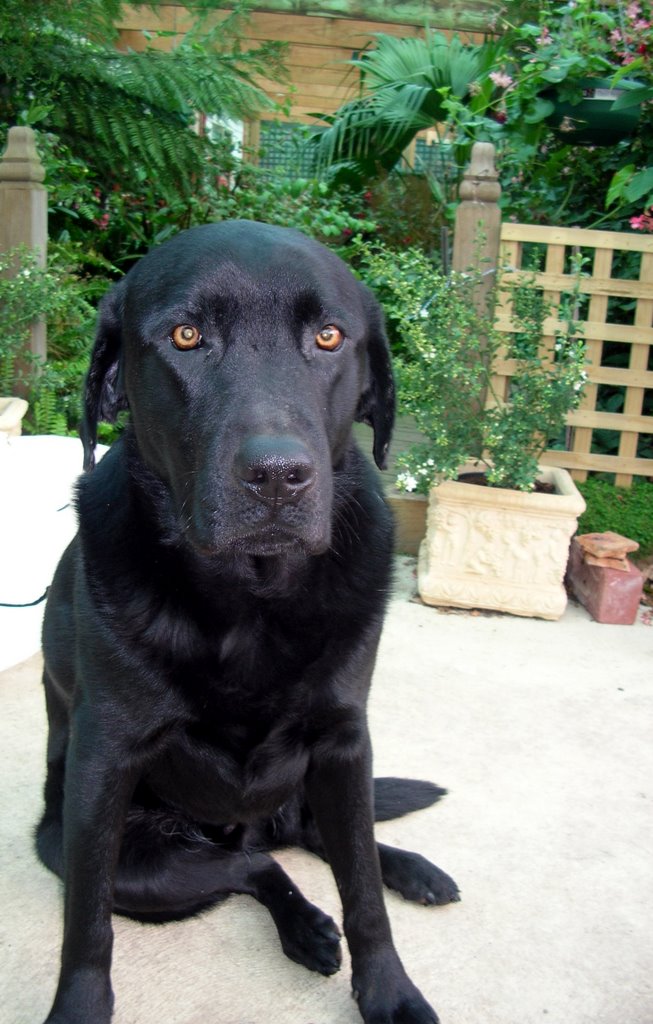


 But, do bear in mind that you are in Monash University Gippsland – not a safari.
 Recreation halls are equipped with audio visual facilities, air-conditioned computer labs, pool tables, and table tennis equipments





 Posts
Posts


